
ENDOSCOPY
An endoscope is a long, thin fiber optic tube with a small camera at the end, that is passed into your body directly to observe an internal organ or tissue in detail through a natural opening such as your mouth. It can also be used to carry out other tasks take biopsy samples & minor surgery.
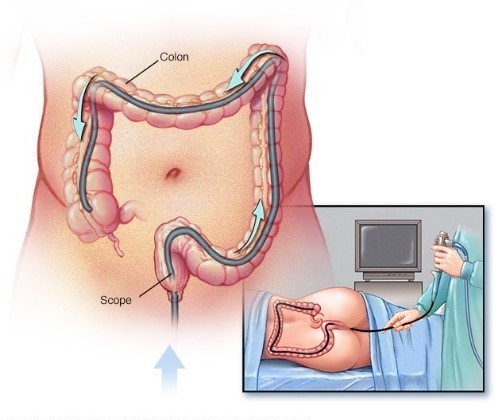
Similarly, endoscopes can be passed into the large intestine (colon) through the rectum to examine this area of the intestine. This procedure is called sigmoidoscopy or (B) Colonoscopy depending on how far up the colon is examined. Endoscopes have a wide range of use in many regions of the human body both for diagnosis & treatment.
LOWER GASTROINTESTINAL TRACT
Common Disorders that Require Colonoscopy
- Investigate intestinal signs and symptoms. A colonoscopy can help your doctor explore possible causes of abdominal pain, rectal bleeding, chronic diarrhea, and other intestinal problems. A tissue sample (biopsy) may be collected to investigate further at the lab.
- A colonoscopy is used to look for changes, such as swollen, irritated tissues, polyps, or screen for cancer, in the large intestine (colon) and rectum.
- Treat an issue. Sometimes, a colonoscopy may be done for treatment purposes, such as placing a stent, removing an object from your colon, or clipping a polyp.
Risks to the Procedure:
A colonoscopy poses few risks. Rarely, complications of a colonoscopy may include:
- A reaction to the sedative used during the exam.
- Bleeding from the site where a tissue sample (biopsy) was taken or a polyp was removed.
- A tear in the colon or rectum wall (perforation).
After discussing the risks with you, your health provider will ask you to sign a consent form giving permission for the procedure.
How to Prepare for the Procedure
Before a colonoscopy, you’ll need to clean out (empty) your colon. Any residue may make it difficult to get a good view during the exam. Your doctor may ask you to:
- Follow a special diet the day before the exam: Typically, you won’t be able to eat solid food. Drinks may be limited to clear liquids — plain water, tea, and coffee without milk or cream, broth, and carbonated beverages. Avoid red liquids, which can be mistaken for blood.
- Take a laxative: Your doctor will usually recommend a prescription laxative in either pill or liquid form, taken the night before or both the night before and the morning of the procedure.
- Adjust your medications: Remind your doctor of your medications at least a week before—especially if you have diabetes, high blood pressure, or heart problems. This includes aspirin, warfarin (Coumadin), dabigatran (Pradaxa), or rivaroxaban (Xarelto) which affect blood clotting.
During the Procedure
- You’ll wear a gown; sedation or anesthesia is usually recommended.
- Lying on your side, a colonoscope is inserted into your rectum.
- The scope contains a light and tube to pump air, carbon dioxide, or water to inflate the colon for a better view.
- A tiny video camera at the tip sends images to an external monitor.
- The doctor can insert instruments to take tissue samples or remove polyps.
- Duration: Typically 30 to 60 minutes.
After the Colonoscopy
It takes about an hour to recover from the sedative. Plan to have someone take you home. Do not drive or make important personal or financial decisions for 24 hours.
- You may feel bloated or pass gas for a few hours. Walking may help.
- A small amount of blood with your first bowel movement is usually normal.
- Consult your doctor if you have persistent abdominal pain, fever, or pass blood clots.
Results Interpretation
Negative Result
No abnormalities found. If stool residue prevented a clear view, a repeat exam may be recommended with a different bowel preparation.
Positive Result
Polyps or abnormal tissue found. Most aren’t cancerous, but are sent to a lab for analysis (cancerous, precancerous, or noncancerous).
Biopsy Result
Tissue samples are examined under a microscope by a pathologist to help identify the cause of your symptoms.
Why Choose Us
Dedicated Specialist Team
Multidisciplinary care from surgeons, nutritionists, and psychologists.
Private Specialized Wing
Exclusive, private recovery suites for bariatric patients.
Lifelong Support
Continuous monitoring to ensure sustainable results and health.
Safe & Proven Methods
Utilizing the latest bariatric surgical and non-surgical technologies.
Book Your Free Consultation
Pick a date and time that works for you. Our specialist will confirm and guide you on the right path to a healthier life.
Still have questions? We're here.
-
Call / WhatsApp +254 789 822 222
-
Email Us info@nairobiweightloss.com
-
WhatsApp Chat with us now
-
Working Hours Mon – Sat: 8:00 AM – 6:00 PM
Why book with us?